
Scholarship Competition
Scholarship Entries are Open
2026-27 Scholarship
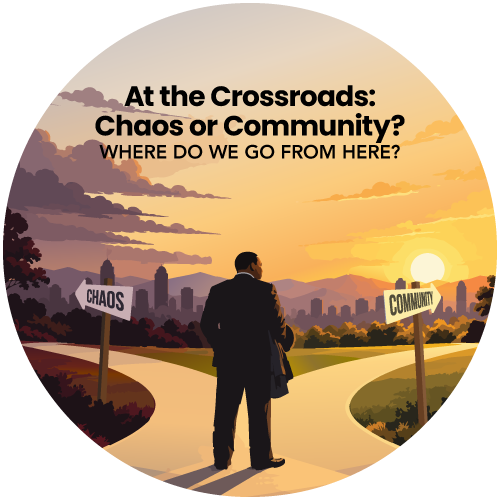
This year, we focus on a question Dr. Martin Luther King Jr. posed in 1967: “Where do we go from here?” His address and final book, Where Do We Go From Here: Chaos or Community?, came during a pivotal period in the Civil Rights Movement, as the nation grappled with both historic progress and unfinished work. We invite you to consider where we are today, define what progress means to you, and share your vision for where we should go from here.
Guidelines and Prompt
The MLK Scholarship Competition offers enrolled students a chance to prepare and deliver a response addressing a prompt for a scholarship reward.
- Moreno Valley College students may prepare and record a speech or spoken word piece.
- MVUSD and VVUSD high school students may write an essay.
The 2026-27 application period closes on November 16, 2026 at 11:59 pm.
In 1967, Dr. Martin Luther King Jr. posed a question that captured both the progress and the uncertainty of the Civil Rights Movement: “Where do we go from here?” That year, he delivered an address by that title at the 10th Annual Convention of the Southern Christian Leadership Conference in Atlanta and published his fourth and final book, Where Do We Go From Here: Chaos or Community? The nation had experienced historic change. Brown v. Board of Education had declared school segregation unconstitutional, the Civil Rights Act of 1964 had outlawed legal segregation and discrimination in many areas of public life, and the Voting Rights Act of 1965 had expanded access to the ballot. King acknowledged these victories, but he also warned that the work was far from complete. Poverty, unequal schools, housing discrimination, economic injustice, racial unrest, and limited access to opportunity continued to shape the lives of millions of Americans. Before the nation could determine where it should go next, King argued that it had to first “honestly recognize where we are now.”
Nearly six decades later, that tension between progress and unfinished work remains. Some argue that the nation has made tremendous progress through expanded legal protections, greater educational and professional opportunities, increased political representation, and the dismantling of many barriers that once existed by law. Others point to the fact that we continue to wrestle with educational inequities, economic disparities, affordable housing, political polarization, community violence, and the challenge of building trust across differences. Still others argue that revisiting, limiting, or rolling back some policies and protections established in the name of equity and civil rights represents progress of a different kind—one they believe is necessary to restore fairness, individual responsibility, constitutional principles, or national greatness.
These competing perspectives raise an even deeper question: Who gets to define progress, and by what measure? Is progress measured by laws, policies, representation, and access; by what people experience in their everyday lives; by the removal of barriers; or by the belief that certain protections themselves have gone too far? Have we progressed, remained stagnant, or in some areas moved backward? And how do we move beyond competing definitions of progress to create lasting opportunity and genuine community for all?
As a nation, we are at a crossroads. King challenged his generation to decide whether the future would be shaped by chaos or community, and that challenge now belongs to us. Will we forever remain at that crossroads, or will we have the courage, wisdom, and collective will to choose a path forward? The question is no longer Dr. King’s alone. It is now ours. Will we choose community or chaos? Where do we go from here?
In a 5–7 minute speech or spoken word presentation, thoughtfully respond to the theme At the Crossroads: Chaos or Community? and address the following questions. The questions are intended to guide your thinking and should be woven into a cohesive presentation rather than answered as separate questions.
- King’s Context: What was happening in America in 1967 that led Dr. King to ask, “Where do we go from here?” What progress had been achieved, and what challenges remained?
- Defining “Here”: Nearly six decades later, what does “here” mean today? Where are we as a nation, and how did we arrive at this moment? Consider issues such as education, economic opportunity, housing, civil rights, political participation, community violence, polarization, and our ability to build trust across differences.
- Defining Progress: What does progress mean to you? As Americans debate whether existing protections, policies, and approaches should be strengthened, changed, reimagined, or rolled back, how should we determine whether those changes represent progress, stagnation, or regression? Who or what should be the measure of progress?
- Choosing the Path: Drawing from Dr. King’s ideas, history, current realities, and your own experiences, observations, reflections, or what you have learned from the experiences of others, where should we go from here? What responsibility do individuals, communities, institutions, and leaders have in determining whether our path leads toward chaos or community?
Your response should go beyond simply describing the problems of today. Consider the progress that has been made, examine differing perspectives about what progress means, and develop a thoughtful, well-supported vision for the path forward. Connect Dr. King’s ideas to the world you see around you and consider what role your generation can play in helping shape what comes next.
Whether you choose a traditional speech or spoken word format, your presentation should reflect your authentic voice and perspective while demonstrating thoughtful engagement with the theme.
At the crossroads before us, what will we choose—and where do we go from here?
- Eligibility: Open to enrolled Moreno Valley College students
- Awards:
- Speech: $1,000 scholarship; $500 scholarship; $250 scholarship
- Spoken Word: $500 scholarship
- Deadline: Monday, November 16 by 11:59 pm
- Selection and Acceptance: All applicants will be notified whether they have been selected. All scholarship recipients must be able to attend the MLK Scholarship Ceremony. You may be asked to present your response at the Ceremony.
- Response Format: Choose one of two ways to respond meaningfully to the prompt: a 5-7 minute speech
or a spoken word piece no longer than 7 minutes long. You will submit both a written
response AND a link to a recording of giving your speech or spoken word performance.
- Type your response. Use MLA or APA format, double spaced, with a cover page. You will be uploading a Word or PDF document. Your works cited can be pasted into the submission form separately.
- Record your performance. A link to a recorded performance (hosted on YouTube) must also be provided. Students may be invited to an in-person presentation of their work.
- Cite Your Sources. When incorporating content from a book, speech, or other sources, give proper attribution in your manuscript by including the name, date, and type of the source you are citing.
- Format Requirements. The name of the student should NOT appear anywhere on the document with the exception of the cover page. Each submission must have a cover page with the following information: your full name, student ID, phone number with area code and email address. The page number and your 7-digit student ID should be in the top right-hand corner of each page.
- How to Submit: Register for the scholarship and submit your response through the online MLK Scholarship entry form by the deadline.
- Resources:
In 1967, Dr. Martin Luther King Jr. posed a question that captured both the progress and the uncertainty of the Civil Rights Movement: “Where do we go from here?” That year, he delivered an address by that title at the 10th Annual Convention of the Southern Christian Leadership Conference in Atlanta and published his fourth and final book, Where Do We Go From Here: Chaos or Community? The nation had experienced historic change. Brown v. Board of Education had declared school segregation unconstitutional, the Civil Rights Act of 1964 had outlawed legal segregation and discrimination in many areas of public life, and the Voting Rights Act of 1965 had expanded access to the ballot. King acknowledged these victories, but he also warned that the work was far from complete. Poverty, unequal schools, housing discrimination, economic injustice, racial unrest, and limited access to opportunity continued to shape the lives of millions of Americans. Before the nation could determine where it should go next, King argued that it had to first “honestly recognize where we are now.”
Nearly six decades later, that tension between progress and unfinished work remains. Some argue that the nation has made tremendous progress through expanded legal protections, greater educational and professional opportunities, increased political representation, and the dismantling of many barriers that once existed by law. Others point to the fact that we continue to wrestle with educational inequities, economic disparities, affordable housing, political polarization, community violence, and the challenge of building trust across differences. Still others argue that revisiting, limiting, or rolling back some policies and protections established in the name of equity and civil rights represents progress of a different kind—one they believe is necessary to restore fairness, individual responsibility, constitutional principles, or national greatness.
These competing perspectives raise an even deeper question: Who gets to define progress, and by what measure? Is progress measured by laws, policies, representation, and access; by what people experience in their everyday lives; by the removal of barriers; or by the belief that certain protections themselves have gone too far? Have we progressed, remained stagnant, or in some areas moved backward? And how do we move beyond competing definitions of progress to create lasting opportunity and genuine community for all?
As a nation, we are at a crossroads. King challenged his generation to decide whether the future would be shaped by chaos or community, and that challenge now belongs to us. Will we forever remain at that crossroads, or will we have the courage, wisdom, and collective will to choose a path forward? The question is no longer Dr. King’s alone. It is now ours. Will we choose community or chaos? Where do we go from here?
In a 750–1,250 word essay, thoughtfully respond to the theme At the Crossroads: Chaos or Community? and address the following questions. The questions are intended to guide your thinking and should be woven into a cohesive essay rather than answered as separate questions.
King’s Context: What was happening in America in 1967 that led Dr. King to ask, “Where do we go from here?” What progress had been achieved, and what challenges remained?
Defining “Here”: Nearly six decades later, what does “here” mean today? Where are we as a nation, and how did we arrive at this moment? Consider issues such as education, economic opportunity, housing, civil rights, political participation, community violence, polarization, and our ability to build trust across differences.
Defining Progress: What does progress mean to you? As Americans debate whether existing protections, policies, and approaches should be strengthened, changed, reimagined, or rolled back, how should we determine whether those changes represent progress, stagnation, or regression? Who or what should be the measure of progress?
Choosing the Path: Drawing from Dr. King’s ideas, history, current realities, and your own experiences, observations, reflections, or what you have learned from the experiences of others, where should we go from here? What responsibility do individuals, communities, institutions, and leaders have in determining whether our path leads toward chaos or community?
Your response should go beyond simply describing the problems of today. Consider the progress that has been made, examine differing perspectives about what progress means, and develop a thoughtful, well-supported vision for the path forward. Connect Dr. King’s ideas to the world you see around you and consider what role you and your generation can play in helping shape what comes next.
At the crossroads before us, what will we choose—and where do we go from here?
- Read and Reflect. Take time to read Dr. King’s 1967 Where Do We Go From Here? address and learn about the historical context surrounding his message. Consider not only what King said, but why he believed the nation had arrived at a crossroads.
- Go Beyond Summary. Do not simply tell us what Dr. King said. Analyze his ideas and consider what they mean in the context of the world you experience today.
- Use Your Voice. Your perspective matters. You may draw upon your own experiences, observations, reflections, community, education, or what you have learned from the experiences of others.
- Consider Different Perspectives. You are not expected to agree with every perspective presented in the background. Consider different viewpoints, wrestle thoughtfully with the complexity of the issues, and develop your own position.
- Support Your Ideas. You may incorporate history, current events, research, statistics, or other credible sources to strengthen your message. When using another person’s words, ideas, or research, appropriately acknowledge the source.
- Connect the Past to the Present. Demonstrate an understanding of Dr. King’s historical context while considering how the questions he raised connect to the realities facing communities today.
- Offer a Path Forward. Identifying problems is only part of the challenge. Your presentation should also consider what individuals, communities, institutions, and leaders can do to help move us forward.
- Engage Your Audience. Remember that this is an oral presentation. Consider not only what you say, but how you communicate it. Think about organization, delivery, pacing, tone, creativity, presence, and your ability to connect with your audience.
- Use Technology Responsibly. Technology, including artificial intelligence, may be used to support brainstorming, research, or editing; however, it should not replace your thinking, writing, creativity, or voice. The final submission and performance should authentically represent your own ideas and work.
- Most importantly, we want to hear you. You do not need to imitate Dr. King’s speaking or writing style. Your responsibility is to thoughtfully engage with the question he left for future generations and determine what it means for yours.
Dr. King asked the question nearly six decades ago. Now the question belongs to us. At the crossroads before us, what will we choose—and where do we go from here?
- Eligibility: Current 9th through 12th grade students from Moreno Valley and Val Verde unified school districts (MVUSD and VVUSD).
- Awards: Four $500 awards.
- Deadline: Monday, November 16 at 11:59 pm
- Response format: 750 to 1,250 word essay, typed.
- You do not need to worry about any essay formatting (bold, italics) as you will be
inputting the text directly in the online application form.
- Ensure there is an extra line between your paragraphs.
- Use quotation marks for titles.
- Denote sources in the body of your essay in MLA format.
- Use MLA format to construct your works cited, which can be added to a separate response field.
- You do not need to worry about any essay formatting (bold, italics) as you will be
inputting the text directly in the online application form.
- Acceptance Requirements: If chosen, you will be contacted by Moreno Valley College representatives. You will be asked to submit a portrait photo and expected to attend the Martin Luther King, Jr. Scholarship Ceremony to accept your scholarship award.
- How to Submit: Register for the scholarship and submit your response through the online MLK Scholarship entry form by the deadline.
- Resources:
Apply for the MLK High School Scholarship Prompt Flyer (pdf)