
Liza Arellano: A Plan, Purpose, and a Career Built on Service
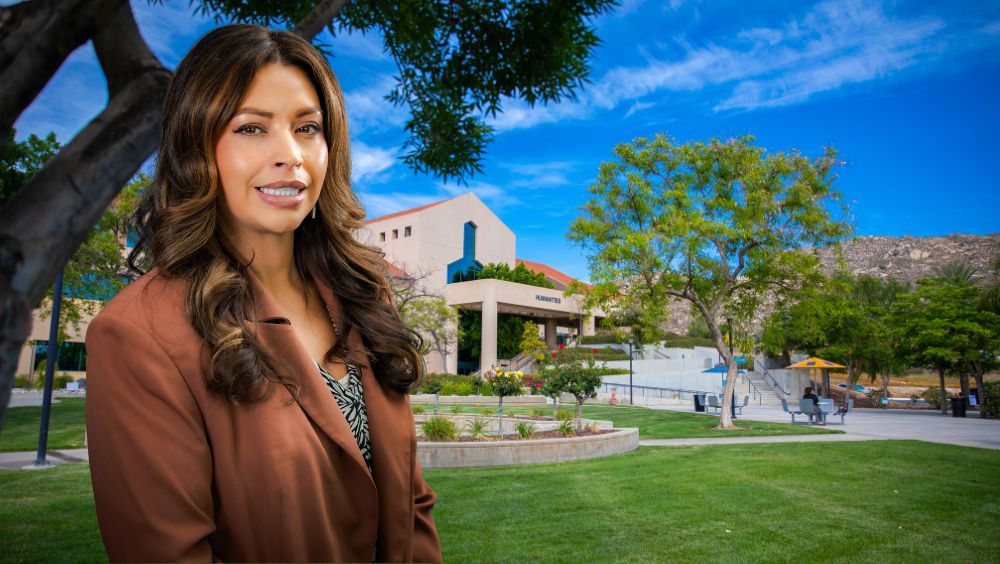
Long before she led a graduate program or supervised child welfare services, Liza Arellano was a recent high school graduate trying to find her footing in higher education without a roadmap.
She enrolled in classes the summer after graduating in 2002 at her local college in Moreno Valley, attending what would later become Moreno Valley College, driven by a clear goal to transfer within two years. Without guidance on applications or standardized testing during high school, she turned to the community college system with determination and a plan. While working part time and living at home, she balanced course schedules across multiple campuses to stay on track.
“I knew I wanted to transfer in two years, so I started with that plan in mind,” Arellano said.
That focus carried her through completion of her general education requirements and on to California Baptist University, where she earned a bachelor’s degree in behavioral science. She credits the academic environment and access to counseling and faculty support with helping her build the confidence to continue her education.
“I was able to thrive academically,” she said. “That experience gave me the foundation to pursue my master’s and doctorate.”
As a first-generation college student growing up in a large Mexican American family, higher education represented more than personal achievement. Raised by a single mother navigating economic instability, Arellano witnessed the long-term impact of limited access to resources firsthand. Some of her siblings struggled with low-wage work, while others returned to school later in life to change their circumstances.
“While we may have grown up in certain conditions, our ticket out of poverty was our education,” she said.
That belief shaped her persistence through the complexities of college systems that were unfamiliar and, at times, overwhelming. Navigating financial aid without guidance was one of her steepest challenges.
“I remember pulling up the FAFSA and feeling so lost,” she said. “But I figured it out.”
Support such as the Board of Governors fee waiver made her journey possible, she said, noting that financial aid can determine whether students remain enrolled or drop out.
Her career path came into focus at age 20 through hands-on experience. While working in residential care facilities serving foster youth, many of whom had experienced abuse, neglect and trauma, the role introduced her to social work and the systems that support vulnerable children and families.
“Prior to that job, I didn’t even know what social work was,” she said. “But getting to know the children and their stories gave me the desire to help.”
She went on to earn a Master of Social Work with a concentration in child welfare and spent more than a decade with San Bernardino County Children and Family Services, eventually serving in leadership roles overseeing programs and operations. Today, she serves at California Baptist University as an assistant professor and director of the Master of Social Work program, preparing the next generation of practitioners.
Her approach to teaching is grounded in lived experience, both her own and that of the students she encountered early in her academic journey.
“We never know what people have gone through and where they started,” she said. “But anyone with persistence and determination can overcome life obstacles through education.”
Beyond the classroom, Arellano remains deeply connected to the community that shaped her. She serves on the Parks, Community Services and Trails Commission for the City of Moreno Valley, helping guide programs, park development and community services.
Her commitment to public service recently expanded into civic leadership. When an opportunity arose to run for local office, she saw it as a continuation of the values that have guided her career.
“This city has given me more than I could have ever dreamed,” she said. “I felt called to serve my community in a greater way.”
She hopes her visibility in leadership encourages broader participation, particularly among women and women of color.
“Our voices matter,” she said. “The voices of our residents matter to improve our city and bring more opportunities for others.”